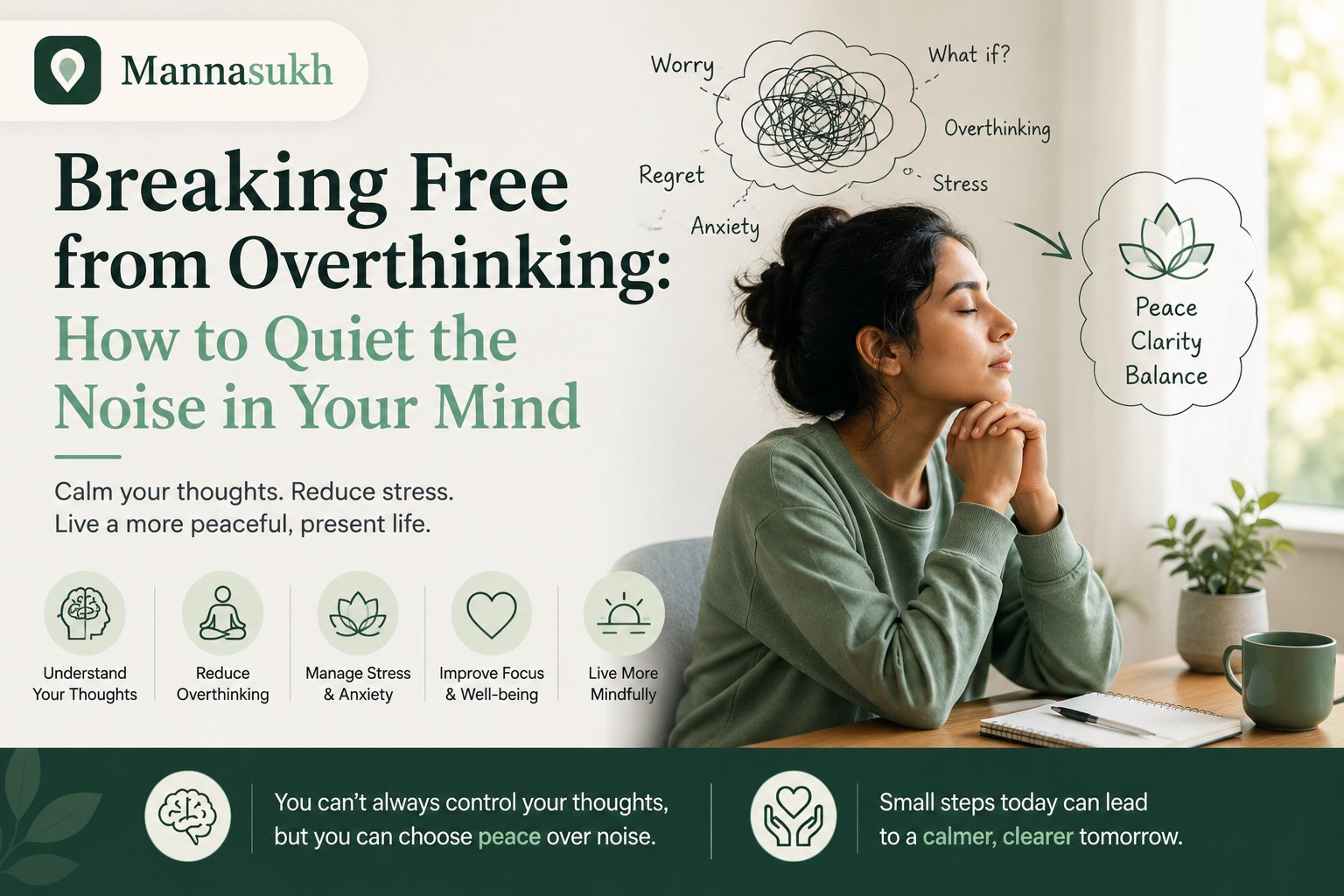
Breaking Free from Overthinking: How to Quiet the Noise in Your Mind.
“What if I make the wrong decision?” “What if they’re upset with me?” “What if something goes wrong?” If these thoughts sound familiar, you’re not alone. Overthinking is something many people experience, especially during stressful or uncertain times. While thinking helps us solve problems, overthinking often does the opposite—it keeps us stuck in a cycle of worry, doubt, and mental exhaustion.What is overthinking?
Overthinking is the habit of repeatedly thinking about the same situation, problem, or conversation without reaching a solution. It often involves replaying the past, worrying about the future, or analysing every small detail.
Instead of helping you feel prepared, overthinking can leave you feeling anxious, overwhelmed, and emotionally drained.
Signs you may be overthinking
Replaying conversations in your mind repeatedly.
Constantly worrying about “what if” scenarios.
Finding it difficult to make decisions.
Overanalyzing small mistakes or situations.
Struggling to relax because your mind feels busy.
Having trouble sleeping due to racing thoughts.
Why do we overthink?
Overthinking usually comes from a desire to feel in control. When we’re uncertain, our brain tries to predict every possible outcome to protect us. Unfortunately, this often creates more anxiety instead of reducing it.
Some common triggers include:
- Fear of making mistakes.
- Anxiety about the future.
- Low self-confidence.
- Stressful life events.
- Perfectionism and the need to “get everything right.”
How overthinking affects your mental health
When overthinking becomes a habit, it can affect different areas of your life:
Increases anxiety: The more you focus on worst-case scenarios, the more anxious you may feel.
Makes decision-making harder: Too many thoughts can make even simple choices feel overwhelming.
Affects sleep: Racing thoughts often make it difficult to fall or stay asleep.
Impacts relationships: You may start overanalysing messages, conversations, or other people’s behaviour.
Drains your energy: Constant mental activity can leave you feeling emotionally exhausted.
Practical ways to stop overthinking
1. Notice the pattern
The first step is recognising when you’re overthinking. Ask yourself:“Am I solving a problem, or am I just going in circles?”
2. Focus on facts, not assumptions
Instead of believing every thought, ask:
What evidence do I have?
Is there another possible explanation?
Am I assuming the worst?
3. Give yourself a “worry time”
Set aside 10–15 minutes each day to write down your worries. Outside that time, gently remind yourself that you’ll come back to them later.4. Stay present
Simple grounding techniques can help bring your attention back to the present moment. For example, notice 5 things you can see, 4 things you can touch, 3 things you can hear, 2 things you can smell, and 1 thing you can taste.5. Take action, even if it’s small
Overthinking often keeps us stuck. Ask yourself:“What is one small step I can take right now?”
Small actions create momentum and reduce the feeling of being overwhelmed.
6. Be kind to yourself
Not every decision has to be perfect. Remind yourself that making mistakes is a normal part of learning and growing.A simple reminder
Your thoughts are powerful, but they are not always facts. Just because your mind imagines a worst-case scenario doesn’t mean it will happen. Learning to pause, question your thoughts, and focus on what you can control can make a significant difference.
Final thoughts
Overthinking is a common experience, and it doesn’t mean something is “wrong” with you. It’s often your mind trying to protect you from uncertainty. The goal isn’t to stop thinking altogether—it’s to think in a way that is helpful rather than harmful.If overthinking is affecting your daily life, relationships, sleep, or emotional well-being, talking to a mental health professional can provide support and practical strategies to help you manage it.
Remember: You don’t have to believe every thought your mind creates. Sometimes, the most powerful thing you can do is let the thought pass instead of holding on to it.