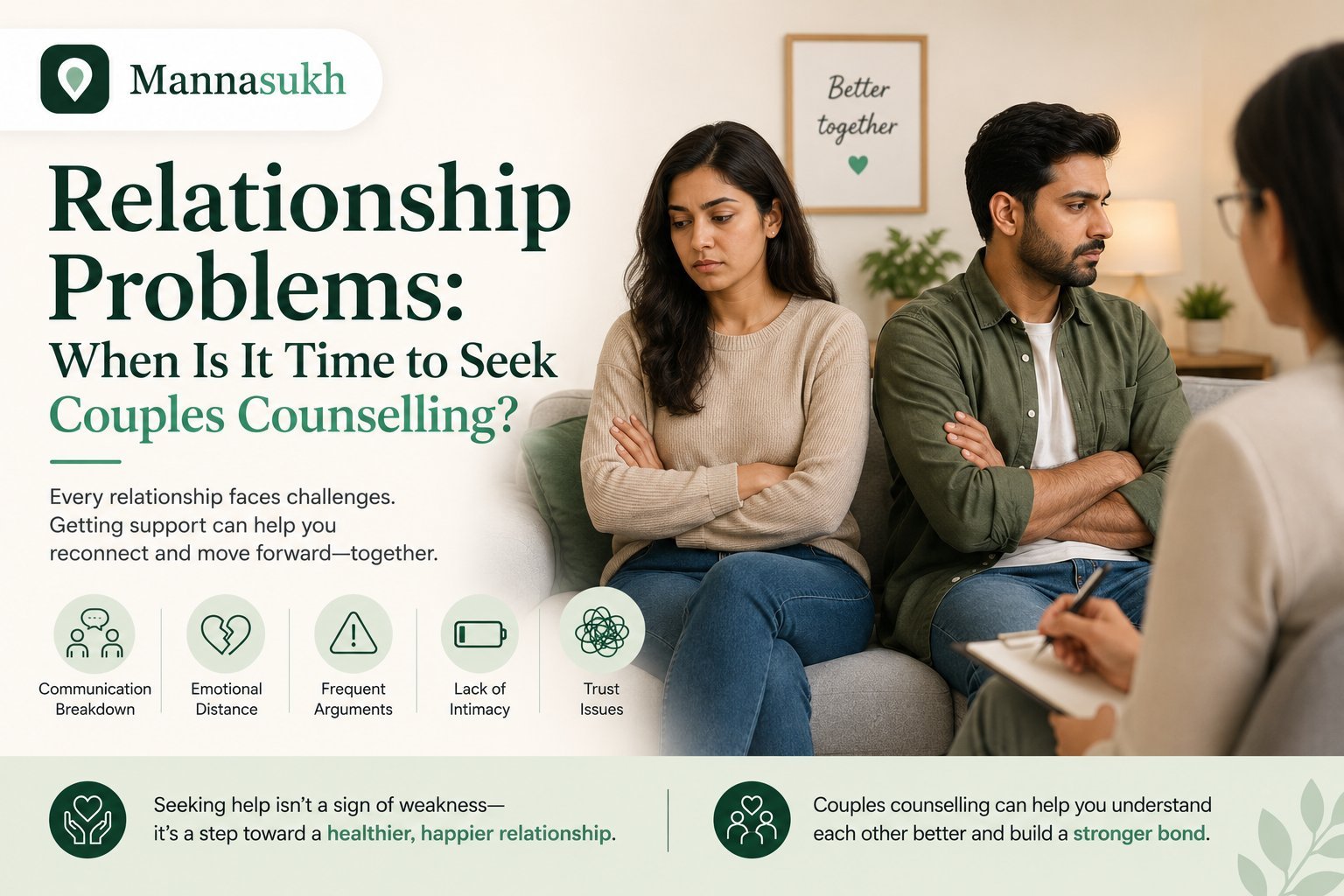
Relationship Problems: When Is It Time to Seek Couples Counselling?
Relationships are one of the most meaningful parts of life. A healthy relationship offers love, companionship, emotional stability and support through life's ups and downs. But even the best of couples have conflicts, miscommunications and emotional separations. Miscommunication, Money stress, Parenting responsibilities, Work stress, or Expectations can make for friction over time.
Conflict is a natural part of all relationships but if it becomes a constant issue and doesn't get resolved, it can slowly erode trust, intimacy, and emotional connection. A lot of couples wait until things are in dire straits in their relationship before they seek any counselling services, as they think that counselling is for marriages that are about to break. In fact, couples counselling works best if it is done early enough before the minor issues develop into major patterns.
If you need relationship support, this is not a failure – it's a way to take your relationship to the next level. No matter how you are dating, engaged, married, or in a long-term relationship, advice can be useful to you to communicate better, restore trust, resolve issues, and find healthier ways to support the other person.
We will discuss the common relationship issues that couples experience, what signs should indicate that it is time to seek relationship counselling, what will occur throughout the relationship counselling, and how a trained relationship counsellor or marriage counselling expert can assist in reconnecting and reconciling again.
Couples Counselling: What Is It?
Couples counselling, also known as relationship counselling, is a type of psychotherapy that aims at improving an intimate relationship between a couple by resolving communication problems, frequent conflict, emotional distancing, trust problems, and other issues that impact the relationship.
A trained relationship therapist provides a neutral, safe, and confidential atmosphere in which both partners may share their feelings and thoughts without fear of being judged. The therapist does not tell couples what is “right” or “wrong”; instead, the therapist assists the couple in recognizing some of the unhealthy relationship patterns, understanding the underlying emotional needs, and learning to work out conflicts in a constructive way.
Couples counselling is suitable for couples at any stage of a relationship, whether they are having serious issues or they wish to develop communication, get ready for marriage, or enhance emotional intimacy.
How do Relationship Problems Arise?
Every relationship has its own set of problems because two people come with their own set of personalities, life experiences, ways of communicating, expectations, and emotional needs to the relationship.
Key issues that can cause problems in relationships are:
Poor communication
Unresolved conflicts
Financial disagreements
Parenting differences
Work-related stress
Lack of quality time
Emotional neglect
Trust issues
Infidelity
Intimacy concerns
Mental health challenges
Family conflicts
Unrealistic expectations
Conflict is a natural part of any relationship, but when it seems to be a consistent issue that is not resolved effectively, it can lead to issues.
10 Signs It's Time to Seek Couples Counselling
1. Communication Has Broken Down
Communication is important and necessary for healthy relationships. When you feel the need to repeatedly resort to some of the following tactics in a discussion, your relationship might need help: silent treatment, criticism, defensiveness, misunderstanding.
Still, many couples cease to communicate openly because they are afraid to face conflict or to be ignored. As important conversations are avoided, relationships develop an emotional distance over time.
A relationship therapist instills in couples healthier ways of communicating so that it becomes more of an understanding process than a blaming process.
2. You Keep Having the Same Argument
If you are not able to solve the problem and you find that you and your spouse or partner are continually talking about the same topic, but no solution is reached, then this is a problem.
If the constant fighting is related to money, housework, parenting or family limits, it may be interpreted as a lack of resolution of the original emotional issue.
Counselling can identify the root causes of these ongoing conflicts and provide strategies for positively managing conflict.
3. Emotional Intimacy Has Faded
Physical intimacy isn't the same as intimacy. Emotional intimacy is characterized as feeling understood, supported, appreciated and emotionally safe with your partner.
When you're living together but you feel disconnected from one another or the discussion is solely about work, responsibilities, and daily duties, therapy can help healthily reconnect you and re-establish emotional intimacy.
4. Trust Has Been Damaged
Building trust is a key component to a healthy relationship.
Trust issues can arise for a variety of reasons, such as:
Infidelity
Dishonesty
Broken promises
Financial secrecy
Emotional betrayal
Repeated disappointment
While rebuilding trust can take time and dedication from both partners, counselling for couples offers a roadmap for regaining trust after betrayal.
5. You're Avoiding Each Other
Emotional withdrawal is one of the biggest indicators of a bad relationship.
Couples can avoid talking about the problem:
Don't spend as much time together.
Avoid meaningful conversations
Sleep separately
Avoid being idle, no interaction.
Feel emotionally numb
It is easy to avoid conflicts in the short term but often leads to resentment building up.
6. Arguments Are Becoming More Intense
There is nothing wrong with having a disagreement, but when it becomes common and involves yelling, insults, criticism, contempt, or emotional manipulation, it can have a negative impact on a relationship.
If there is a regular pattern in which both people feel hurt, scared or run down after conflict, it's really important to seek professional help before this becomes a habit.
7. Life Changes Are Creating Stress
Relationships can be under pressure from major life changes.
Examples include:
Marriage
Becoming parents
Career changes
Relocation
Financial difficulties
How to support older parents
Retirement
Infertility
Loss of a loved one
Relationship counseling assists couples to “run alongside” these changes instead of getting torn apart by the stresses.
8. Physical Intimacy Has Changed Significantly
With intimacy changing doesn't always mean that the relationship is failing, but if it never stops being a place of avoidance of physical or romantic contact, look into the emotional part of the relationship.
Intimacy can be impacted by stress, resentment, unaddressed conflict, medical problems, anxiety, depression and communication breakdown.
An experienced relationship therapist can facilitate these issues between couples in a non-judgmental and respectful manner.
9. You're Considering Separation or Divorce
Several couples only embark on therapy when they have decided to break up.
But, counselling is much more useful prior to that point.
When either party is wondering if the relationship will survive, professional help at an early stage may offer opportunities to heal, gain clarity and make healthier choices.
10. You Still Love Each Other but Don't Know How to Fix Things
One of the best signs that couples counselling might help is that both individuals genuinely care for each other but are stuck.
Sometimes love isn't enough to solve communication issues, emotional scars or conflicts.
There are tools in therapy that many couples never learned.
Common Relationship Issues Addressed in Counselling
Couples relationship counselling can assist couples in dealing with a lot of concerns, such as:
Communication difficulties
Frequent arguments
Trust issues
Infidelity recovery
Marriage conflicts
Premarital counselling
Parenting disagreements
Emotional disconnection
Financial conflict
Sexual concerns
Jealousy
Anger management
Blended family challenges
Long-distance relationship struggles
What Takes Place in Couples Counselling?
Many couples are hesitant since they are not sure about what to expect.
In the first few sessions, your therapist will likely concentrate on the following:
Relationship history
Current concerns
Communication patterns
Individual perspectives
Emotional needs
Relationship goals
The therapist does not advocate for one partner or the other but collaborates with both to recognize dysfunctional patterns and to bring in new interactions and behaviors that will help them to achieve the goal of the therapy.
As time goes on, sessions can feature communication skills, conflict resolution, emotional awareness, trust-building activities and real-life relationship skills.
Benefits of Relationship Counselling
Getting assistance early provides many benefits such as:
Improved communication
Healthier conflict resolution
Increased emotional intimacy
Rebuilding trust
Improved awareness of need which is shared
Reduced resentment
Improved teamwork
Stronger problem-solving skills
Greater relationship satisfaction
Healthier long-term partnership
Couples, even those with fairly healthy relationships, can find benefit in counselling as it lays the emotional groundwork for a better relationship.
Marriage Counselling vs Couples Counselling
Many people question if these terms refer to the same thing.
Marriage counselling is a type of counselling that is conducted specifically with married couples, helping them to deal with issues surrounding marriage, commitment, kids, shared duties and family dynamics.
However, couples counselling can be beneficial for any committed partners whether they are dating, engaged, live in a relationship, LGBTQ+ or married couples.
Both methods involve the same sorts of therapeutic techniques except that the relationship phase of the couple differs.
How to Choose the Right Relationship Therapist
Selecting the right therapist is a crucial aspect of counselling.
Seek someone who:
Has professional qualifications in psychology or counselling.
Expert in couples or marriage therapy.
Uses evidence-based therapeutic approaches.
Establishes safe and non-judgmental environment.
Promotes shared engagement of both partners.
Possesses experience with your concerns.
It may take time to find the right therapist, but a good therapeutic relationship makes a huge difference.
Is Online Couples Counselling effective?
Yes. Couples counselling has grown in popularity and studies indicate that a lot of problems can be helped with online couples counselling.
Benefits include:
Greater convenience
Flexible scheduling
Access from various sites.
Comfortable home environment
Reduced travel time
Increased privacy
It is good for many couples to be able to attend sessions together, even if geographically they are not able to do so due to work.
Frequently Asked Questions (FAQs)
Is couples counselling only for relationships in crisis?
No. Couples counselling can be beneficial at any stage of a couple. Couples come to therapy to enhance communication, get ready for marriage, deepen intimacy, or avoid future conflict.
When should couples seek counselling?
The sooner, the better. Early intervention may yield better results if communication has become problematic, conflicts are unresolved, trust is damaged or emotional distance is increasing.
Does couples counselling mean our relationship is failing?
Absolutely not. Taking expert advice signals you're dedicated to making your relationship better. A lot of healthy couples find counselling to be a proactive measure for strengthening their relationship.
Will the therapist take sides?
A trained relationship therapist is neutral in the counselling process. They are there to understand both sides, to communicate and help couples collaborate for mutual objectives.
How many counselling sessions do couples usually need?
The number of sessions will depend on the issues involved, the goals for the relationship, and the willingness of both partners to participate in the session. Partners may want short term counselling, and others may opt for longer term counselling.
Is marriage counseling possible after infidelity?
Yes. If both people want to continue the marriage together, then marriage counselling can offer a form of support that can help heal the relationship, enhance communication and rebuild trust after infidelity, as long as each person is honest, accountable and committed to repairing the relationship.
Is online relationship counselling effective?
Yes. Online relationship counseling provides flexibility and convenience as well as the same evidenced based therapeutic skills taught in the in-person approach. Some couples feel that they can more easily see each other for sessions regularly in a virtual setting.
Final Thoughts
All relationships have their own problems, but if they are not solved, they don't have to determine the course of your future together. Healthy relationships are not formed through avoidance of conflict, but through the ability to communicate, understand, and work together to face life's challenges.
Couple counselling is not a solution at the end of the road – it is an investment in the relationship. From communication challenges to trust issues, emotional distance, parenting differences, or simply the day-to-day stresses, relationship counseling with a professional relationship therapist can be the key to reconnecting, settling conflicts, and strengthening your relationship.
Don't feel like it is a failure of your relationship if you ask for help. This is an indicator that you care about your relationship sufficiently to take steps to strengthen it.
Make the first step towards a healthier relationship.
When you and your spouse have been in conflict many times, falling out emotionally, or having trouble deciding on significant issues, it's time to call for help.
Make a couple's counselling appointment with a qualified relationship counsellor or experienced marriage counsellor today. Early intervention can restore trust, communication, emotional connection and provide your relationship with the means necessary for years of successful and healthy relationships.