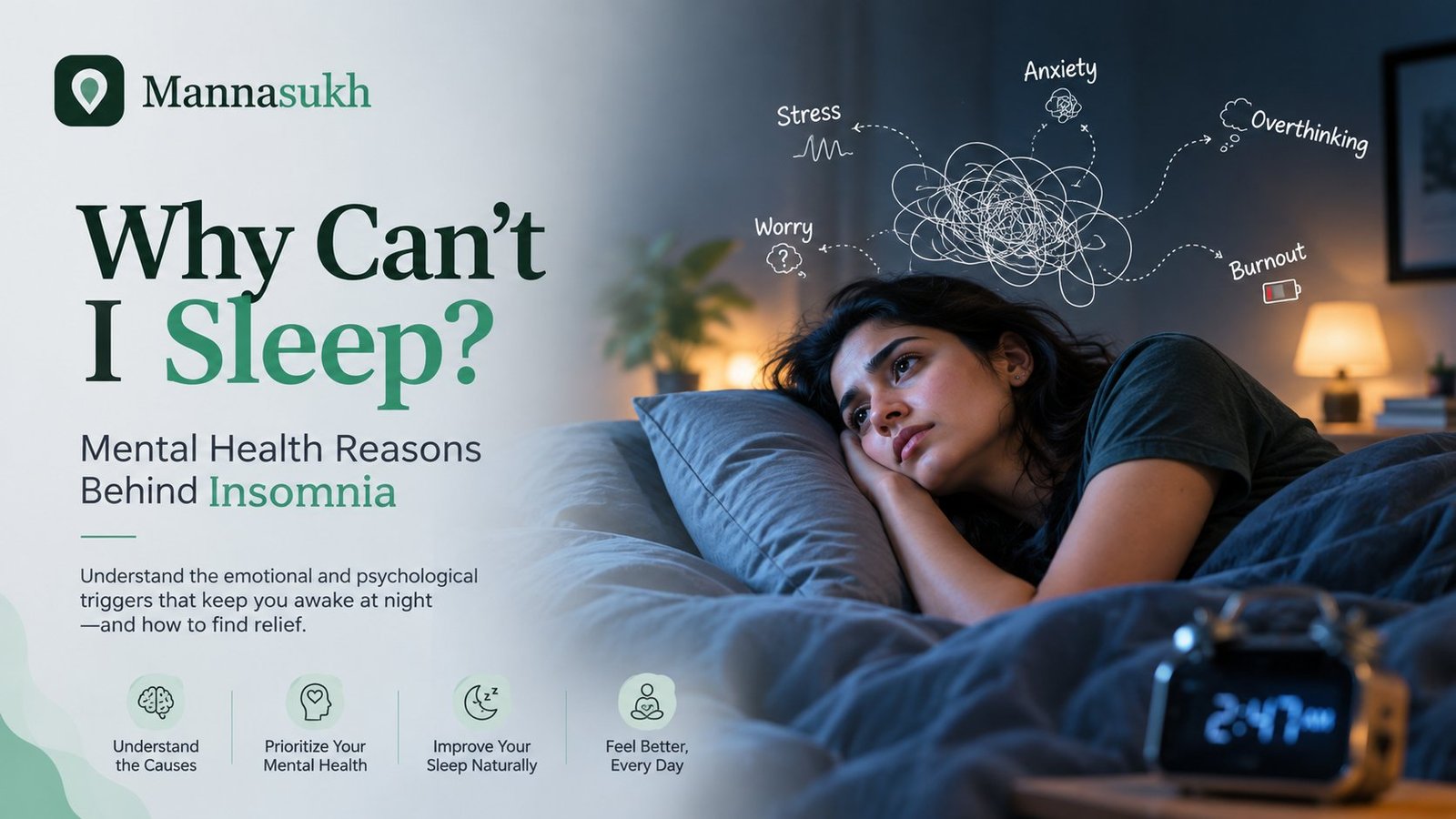
Why Can't I Sleep? Mental Health Reasons Behind Insomnia
Sleep is one of the most critical components of health and wellbeing, but tens of millions of people are awake at night and asking themselves the question, "Why can't I sleep?" Insomnia can impact your health, mood and quality of life, whether it's the inability to fall asleep or getting up many times at night, or feeling weary and run down after having been in bed for many hours.
Many people think that insomnia will only be the result of poor sleeping patterns or physical illness, but mental illness can also make a significant contribution. Various factors like stress, anxiety, depression, trauma and chronic emotional strain can interfere with the body's natural sleep-wake rhythm and make it more difficult to obtain restful sleep. For many, insomnia can result in mental health issues and, in some cases, become a symptom and a risk factor as well, making it hard to get over without the right treatment.
Awareness of the relationship between mental health and sleep is the starting point towards better mental health and sleep. In this article, we will look at the most common insomnia causes that are related to mental health, as well as how mental health issues like sleep anxiety, stress and depression affect sleep, and insomnia treatment options that can help get you a healthy sleep.
What Is Insomnia?
Insomnia is a widespread sleep disorder defined by chronic problems with initiating or maintaining sleep, or waking up too early in the morning or sleep that does not allow for restful sleep. Chronic insomnia is when a person has trouble sleeping for a few weeks or months, and it can start to interfere with their daily life. Chronic insomnia is different to an occasional sleepless night due to stress or excitement.
Insomniacs often feel tired, forgetful, cranky, moody, unproductive or unable to handle everyday tasks. Inadequate sleep may also lead to other chronic health problems like cardiovascular disease, a weakened immune system, depression, and anxiety disorders in the long run.
Insomnia can be experienced in isolation, but more frequently is associated with underlying psychological or emotional issues.
Strong Connection Between Mental Health and Sleep
There is a bi-directional relationship between sleep and mental health. Sleep problems and other mental health conditions can disrupt sleep, and poor sleep can exacerbate mental health problems. The brain is more susceptible to stress when emotionally tense, racing thoughts, increased alertness and tensions in the body disrupt the normal sleep process.
Likewise, chronic insomnia disrupts the brain's function, emotional control, decision making, and ability to withstand stress. This forms a vicious cycle of mental health issues affecting sleep and poor sleep worsening mental health issues.
It is important to recognise this link as an improvement in one will lead to an improvement in the other.
10 Mental Health Reasons Behind Insomnia
1. Anxiety Keeps the Brain in a Constant State of Alertness
One of the most common causes of insomnia is anxiety. Anxiety is a condition that can make it difficult to "shut down" the thoughts that come with it before sleep. The mind doesn't stop worrying about work, money, relationships, health, or future obligations.
When anxiety is triggered the body responds to it by preparing for fight or flight, which leads to heightened muscle tension, alertness and an increase in the heart rate. The brain stays on guard and won't let the user sleep, making sleep difficult to come by even if the user is physically tired.
Persistent sleep problems are common among people with anxiety disorders such as generalized anxiety disorder, social anxiety disorder, panic disorder, and health anxiety.
2. Sleep Anxiety Creates Fear Around Bedtime
Some people find they are unable to sleep and this causes anxiety in itself. This is what is known as sleep anxiety and is a common occurrence where the individual over-thinks and becomes overly concerned about sleeping.
Worrying about not sleeping again tonight or worrying about not functioning tomorrow if I don't sleep now further contributes to stress and increased difficulty in sleeping. Bedtime eventually becomes linked with frustration, worry and a sense of the inevitable: another sleepless night.
Often times, the anxiety and the sleep problems can be treated together to break this cycle.
3. Depression upsets normal sleeping habits
While fatigue and low mood are often the symptoms of depression, it also can affect sleep. Others may also suffer from insomnia, or oversleep but still feel fatigued upon waking.
Depression can disrupt the process of sleep and make it harder for you to get a good night's sleep, plus causing more frequent waking during the night. Early morning awakening is another symptom of depression, as many people get out of bed several hours before they want to.Early morning awakening is another symptom of depression where many people get up several hours before the time they would like to get up and then have a hard time falling asleep again.
Good treatment for depression can result in significant improvement in sleep patterns.
4. Chronic Stress Impedes Mind Relaxation
Stress is a part of life and constant stress can greatly disrupt healthy sleep. The brain can remain in a perpetual problem-solving mode due to money issues, job stress, care responsibilities, schoolwork or continuing arguments.
The mind can still race and replay conversations, imagine tasks to complete, or imagine the worst that could happen after you've laid down in bed. This mental activity does not allow the body to fall asleep and leads to chronic insomnia.
To understand the relationship between stress and sleep is important because when the stress is decreased, the sleep quality is improved.
5. Trauma, and Post-Traumatic Stress Disorder (PTSD)
People who have suffered traumatic events can have difficulties sleeping because they have nightmares and flashbacks, are hypervigilant or feel more unsafe.
The nervous system is very sensitive and doesn't allow you to relax and sleep. Some people wake up several times during the night and others do not sleep at all because they think that they will have bad dreams.
Trauma-informed therapy is effective in enhancing emotional healing and sleep.
6. Over thinking and racing thoughts
A common insomnia complaint is that one feels tired physically, but not able to turn off their mind. Rather than winding down at night, they may be engulfed in unfinished discussions, plans, concerns and endless "what if" questions.
A problem with overthinking is that it keeps the brain from going to sleep. This makes it more difficult to fall asleep even when tired.
Knowing how to cope with repetitive thoughts healthily can have a tremendous positive impact on sleep.
7. Panic Disorder and nighttime panic attacks
Some people suffer from panic attacks immediately after falling asleep or while they are asleep. They can experience a sense of fear, dizziness, sweating, rapid heart rate and chest tightness that awakens them suddenly.
Many people become afraid of going to sleep after having a panic attack while sleeping at night because they are afraid of having another one again. This expectation only makes people more anxious and leads to even more sleep disturbance.
Treatment by a professional can help lessen panic symptoms and sleep problems.
8. Burnout and Emotional Exhaustion
Burnout is more than just after a hectic week! Emotional fatigue, due to too many work commitments or too much caring for other people or excessive stress, can affect normal sleep patterns.
Interestingly, individuals who are suffering with burnout tend to feel tired throughout the day but further along, have a very hard time getting to sleep at night due to nervous system overstimulation. Burnout is a psychological stress and a lifestyle change.
9. Grief and Emotional Loss
When a significant loss like death, the end of a relationship, or any other important life loss occurs, sleep can be impacted. Grief can evoke a wide range of emotions that can make sleep elusive such as sadness, longing, guilt, anger or anxiety.
Sleep disturbances are common as part of the grieving process, but if this sleeplessness persists for a few months, it may need extra support.
10. Poor Emotional Regulation
People who don't express stress or emotions frequently will experience stress buildup during the day. When it comes time for sleep and all the outside noise is gone, unsettled feelings can emerge, making it challenging to relax.
Learning healthy emotional awareness and coping skills can lessen mental stress and enhance sleep quality with time.
Common Symptoms of Insomnia
You might have insomnia if you have a number of the following symptoms on a frequent basis:
Insomnia, despite high need for sleep.
Interruption of sleep with frequent waking.
Getting up much too early.
Lack of energy following sleep.
Fatigue, lack of energy, in the day.
Difficulty concentrating.
More irritability or mood swings.
Poor memory, decreased productivity.
Anxious, nervous about sleep.
Requiring caffeine to get through the day.
Any of these symptoms that persist for several weeks should be evaluated by a professional.
How mental health professionals diagnose insomnia.
Insomnia is not just a matter of how much or how little sleep you are getting. Healthcare providers consider:
Sleep history
Mental health symptoms
Daily routines
Medical conditions
Medication use
Lifestyle habits
Stress levels
Emotional well-being
Further sleep testing sometimes might be ordered to exclude other sleep disorders, like sleep apnea or restless leg syndrome.
Effective Insomnia Treatment Options
Fortunately, there is effective treatment for insomnia, especially if mental health issues are taken into consideration in conjunction with sleep habits.
Cognitive Behavioral Therapy for Insomnia (CBT-I)
CBT-I has been recognized as the best treatment for chronic insomnia. It assists them to recognise thoughts and actions which prevent sleeping and educate better sleeping patterns and relaxation skills.
CBT-I treats the root causes of insomnia and offers long-term benefits, unlike sleep drugs which cannot do so.
Anxiety, depression, and trauma therapy.
Insomnia can be attendant to mental health issues; addressing the mental health problem will improve insomnia. Therapy can assist in learning new coping mechanisms, decrease emotional stressors, and enhance overall health and wellness.
Stress Management Techniques
Dealing with stress in the day can have a positive impact on sleep. Helpful techniques include:
Deep breathing exercises
Progressive muscle relaxation
Mindfulness meditation
Journaling
Gentle stretching
Yoga
Spending time in nature
Minimizing stress helps the nervous system relax and ease into sleep.
Improve Sleep Hygiene
Regular sleeping patterns promote good sleep and limit distractions.
Recommendations include:
Keeping a regular sleeping routine.
Keeping electronics out of the bedroom.
Caffeine in the evening is to be avoided.
Maintaining cool, dark and quiet bedroom environment.
Only sleeping in bed and intimacy.
Restraint from eating large amounts of food right before sleep.
Sleep hygiene must be a first step towards recovery, though it is not always enough to cure chronic insomnia.
Medication
In some people, short-term sleep medication or a medication for underlying anxiety or depression might be helpful. Always given and supervised by a trained professional in the health care field, and often administered along with therapy.
When Should You Seek Professional Help?
If they have an occasional sleepless night, it is normal, but if they are a frequent occurrence, this should not be ignored.
If you have any questions, please consult a health care professional if:
The sleep disturbance persists for 3+ weeks.
This makes it difficult for them to function during the day.
Insomnia is associated with feelings of anxiety or depression.
You are worried about sleep regularly due to sleep problems.
You have not been able to improve your sleep with self-help strategies.
You are tired and run down in work, relationships, and/or daily life.
If you can treat insomnia early, it can usually be avoided becoming a chronic condition.
Frequently Asked Questions (FAQs)
Does anxiety lead to insomnia?
Yes. Anxiety and stress are among the most prevalent insomnia causes as they remain the brain in a heightened state of alertness. Difficulty relaxing and getting to sleep because of persistent worry, racing thoughts and physical tension.
What is Sleep Anxiety?
Sleep anxiety is hyperactivity about sleeping or waking up. Individuals who suffer from sleep anxiety tend to get more stressed out when they try to go to sleep, and this increases their struggle to fall asleep. Sleep-anxious individuals tend to become more stressed at bedtime, and that also makes it more difficult for them to fall asleep.
Does insomnia count as a sleep disorder?
Yes. One of the most prevalent sleep problems is insomnia, a condition characterized by an inability to fall asleep, stay asleep or get a restful night's sleep, despite the availability of sufficient sleep time.
Can stress alone keep you awake?
Absolutely. Stress and sleep are well known to be related. Chronic stress triggers the body's stress response, causing the brain to stay in a state of "stress" that makes it hard to relax enough to fall asleep.
What is the best treatment for insomnia?
The best treatment for insomnia is determined by the cause. There are several evidence-based treatment options, including therapy for anxiety or depression, stress management, healthy sleep habits, and medication (if appropriate).
What is the period of insomnia that warrants help?
Sleep disturbances that happen at least three times a week for several weeks and interfere with your functioning, relationships, work or emotional status should be discussed with a health care professional or mental health service.
Final Thoughts
If you are wondering, “Why can't I sleep?”, it is crucial to realize that insomnia can be more than a nightly issue. Psychological issues like anxiety, depression, chronic stress, trauma, burnout, and sleep anxiety are often major factors in sleep disturbances.
The good news is that insomnia is very treatable. With knowledge of the insomnia causes, emotional health, sleep routines and professional help in time, one can conquer sleepless nights and have good sleep again.
If insomnia has been affecting your quality of life for several weeks or months, don't ignore the symptoms. Talk to a health care provider who specializes in mental health and sleep disorders can help you determine the cause and develop an individualized treatment plan to improve sleep and mental wellness. Getting a good night's rest is not a privilege; it's a necessity for a healthier, happier, more balanced life.